
Table of Contents
- The cake is not the end of the process - it is its second half
- Texture as the language of a brand
- What a multifunctional mill can do
- Two mills, one philosophy - which to choose?
- From cake to a product with character - how it looks in practice
- How to weave milling into the rhythm of the press house
- Building a brand around the producer, not just the product
- Frequently asked questions (FAQ)
A warm, compact disc slides out of the press. It smells nutty, still steaming, and under your fingers you can feel the fat that never made it into the oil. For many press houses this is where the process ends - the oil flows to the filter, and the cake goes into a sack destined for animal feed or compost. Yet this is exactly where the second, usually underrated half of the seed's story begins. Press cake is not waste. It is a raw material waiting for someone to give it form. And the tool that gives it that form is the mill.
In recent years, more and more farms, manufactories and small pressing operations have stopped seeing pressing as a single task. Cold-pressed oil is no longer just a product - it has become a story about the seed, the place, and the person behind the whole process. In that story, the cake is no longer the tail end but the next chapter. And the way we process it decides whether one raw material yields a single product, or a whole family of goods with a recognizable character.
This article is about texture. About how the grind - a seemingly technical detail - becomes the language of a brand. And about how a well-chosen press cake mill turns a press house's daily work into a craft that cannot easily be copied.
The cake is not the end of the process - it is its second half
For decades, oilseed processing followed a simple division: the oil was the product, and the cake was whatever was left over. That way of thinking made sense in a model where only volume mattered. Today, when consumers increasingly ask not only what they are buying but who made it, that division no longer holds up.
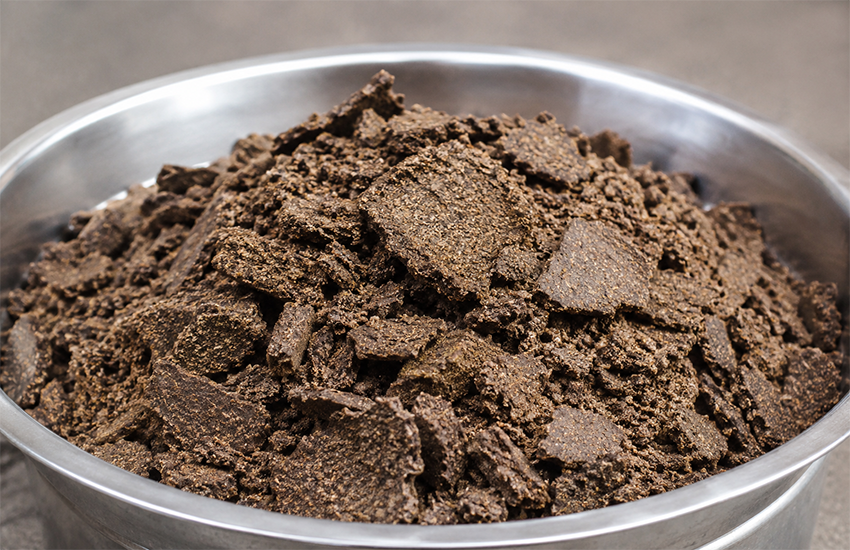
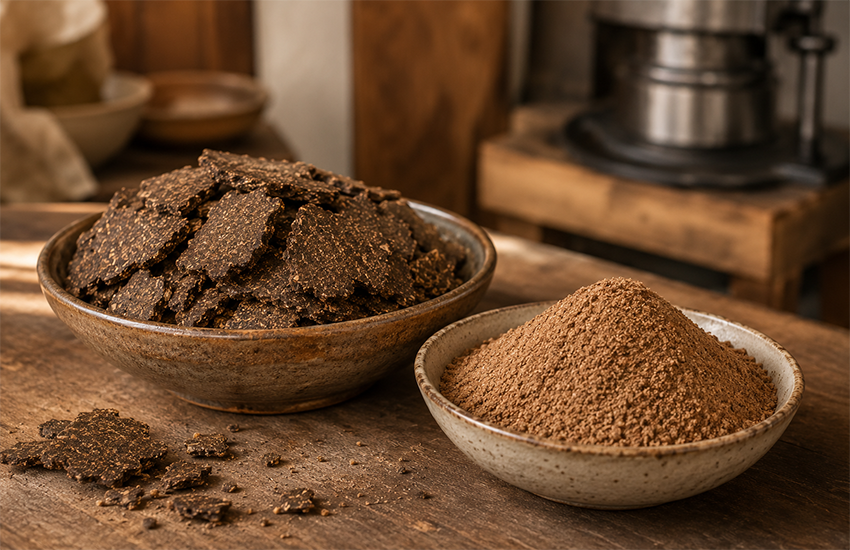
The press cake produced during oil extraction is a concentrated part of the seed. It retains the fibre, protein, minerals and aromas that give it a pronounced, often more intense character than the raw grain itself. Black seed cake smells spicy and peppery, pumpkin cake has a deep, faintly nutty tone, and hemp or flax cake bring a green, vegetal note. These are not random remnants - they are a material with a distinct flavour and structure, simply waiting to be processed.
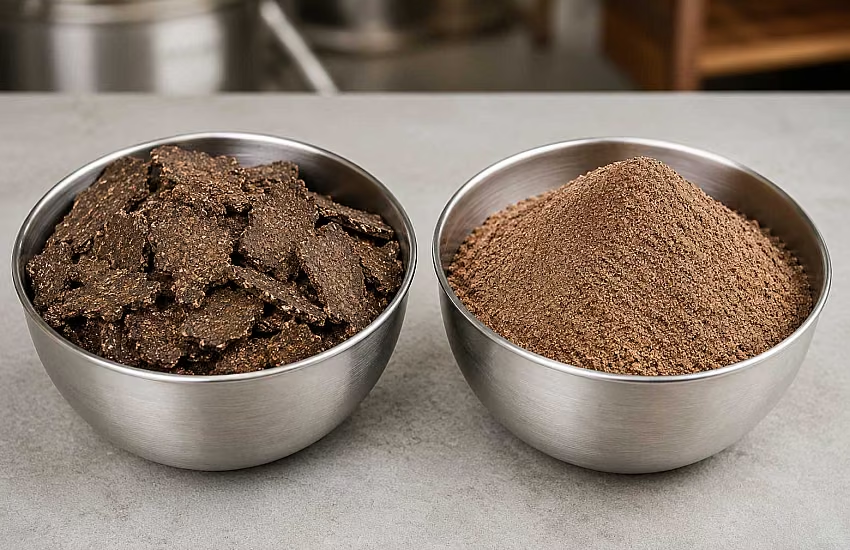
The problem is that in the form of a compact disc, press cake is difficult to use. Hard, uneven and prone to absorbing moisture, it rarely goes straight to the kitchen or onto a shop shelf in that state. Only milling unlocks its true potential. That is the moment the raw material takes on a form we can deliberately shape: from a dusty flour, through a fine meal, all the way to coarser flakes.
Concentrated flavour and the value of the seed
It is worth pausing for a moment on what press cake actually is. What remains after the oil is released is far from worthless - on the contrary, the cake concentrates a good deal of the best the seed has to offer. Fibre, plant protein and minerals stay behind, and with them a characteristic, often very pronounced aroma.
Interestingly, the flavour of press cake tends to be more intense than that of the raw grain. Pressing and contact with the press concentrate the taste, so flour made from cake can surprise you with its depth. Pumpkin cake has a nutty fullness, black seed cake a spicy sharpness, and flax and hemp contribute a vegetal freshness. For a producer, this is a ready-made flavour base that simply needs to be milled correctly to draw out its full character. It is precisely this concentration of taste that lets cake-based products turn out more vivid and more interesting than products made from raw material that never passed through a press.
Why more and more press houses mill on site
The trend toward home oil production has brought with it a natural next step - the desire to control the entire process, from seed to finished product. Not long ago, many producers handed their cake off to outside processors or simply discarded it. Today, more and more of them choose to mill on site, in the same place where they press their oil.
The reason is simple: whoever controls the whole chain also controls the quality and identity of their product. Milling on site means the cake does not wait for weeks, does not travel, and does not lose its freshness. It goes into the mill when the producer wants it to, in a condition they have judged themselves, and at a grind they have chosen themselves. The same sense of agency that drew farmers toward owning their own press now leads them one step further - to owning their own milling.
In this way, the press house stops being a place where a single task is performed. It becomes a small manufactory in which the seed travels its full path of transformation. And the mill - alongside the press - becomes the second pillar of that process.
Texture as the language of a brand
When we talk about the quality of a food product, we usually think of flavour, aroma and ingredients. Texture is treated as something obvious, secondary. And yet it largely determines how we perceive food. The crunch of a topping, the dustiness of a flour, the spring of a dough - all of these impressions are born from the physical structure of the product. And all of them begin at milling.
For a producer, that realisation carries real weight. The same cake, milled in different ways, yields products with completely different uses and sensations. A fine flour melts into a dough and adds flavour in the background. A coarser fraction stays perceptible, adds structure, crunches between the teeth. This is not a cosmetic difference - it is the difference that lets one raw material reach several entirely different applications.
And here a key idea emerges: texture can be a signature. Just like the distinctive aroma of an oil, a recognisable structure of flour or topping can become a manufactory's hallmark. A customer who once falls in love with the exact coarseness of your pumpkin topping will keep looking for it - because no one else makes it in quite the same way.
One raw material, many textures
The greatest strength of a good mill is that it lets you create a whole range of products from a single cake. This is not theory - it is the daily practice of manufactories able to see press cake as a material rather than a by-product.
From cake you can produce a delicate coconut, hemp, pumpkin, flax or black seed flour - perfect for baking, smoothies and spreads. You can stop at a medium grind and obtain a meal that works as a base for porridge or a thickening addition. You can also deliberately leave coarser flakes that decorate a salad, bread or muesli and bring a pronounced structure. One raw material, one device - and several different products as a result, each with its own place and its own audience.
This approach changes the way a producer thinks about their offer. Instead of a single, rigidly defined product, they get a palette of possibilities they compose themselves. And all of it from a raw material that, until recently, was often treated as a leftover from pressing.
The texture a customer remembers
Texture reaches the senses faster than any description. Before a customer has had time to think about flavour, their hand feels the softness of a flour and their teeth feel the crunch of a topping. These are impressions that lodge in the memory and build an association with a specific product. A well-chosen structure can make the very same bread or granola recipe take on an entirely different character, and bring a customer back precisely because they felt it with their whole body, not just their palate.
For a manufactory, this is an important lesson: in working on texture, we are working on the experience a customer takes away with them. A fine pumpkin flour brings velvet to a cream, while a coarser grind of the same pumpkin adds definition to a crunchy topping on top. Working deliberately with the grind is a way to make one raw material tell several stories - and to make each of them recognisable as yours. Texture stops being an accident and becomes a conscious element of building a brand.
Why textures are hard to copy
In a world where recipes and ideas spread in an instant, real value lies in what cannot easily be repeated. Flavour can be imitated, packaging copied, a name approximated. But a specific, deliberately chosen texture profile is the result of experience, equipment and the decisions made at milling.
A grind that has become a hallmark is the product of many small choices: how dry the cake was, how the mill was set, how long the milling lasted, which discs were used. A competitor who does not know these details and does not work on a similar device will struggle to reproduce exactly the same result. In this way texture becomes part of your advantage - a quiet but real point of difference for the brand.
This is also why it pays to control your own milling. When you hand that stage to someone else, you also hand over part of the product's identity. Milling on site keeps it where it belongs - close to the person responsible for it.
What a multifunctional mill can do
Although this article devotes most of its attention to press cake, it is worth stressing that a modern mill is a far more versatile device. It is precisely that versatility that makes it the heart of a small manufactory rather than a mere accessory to the press.
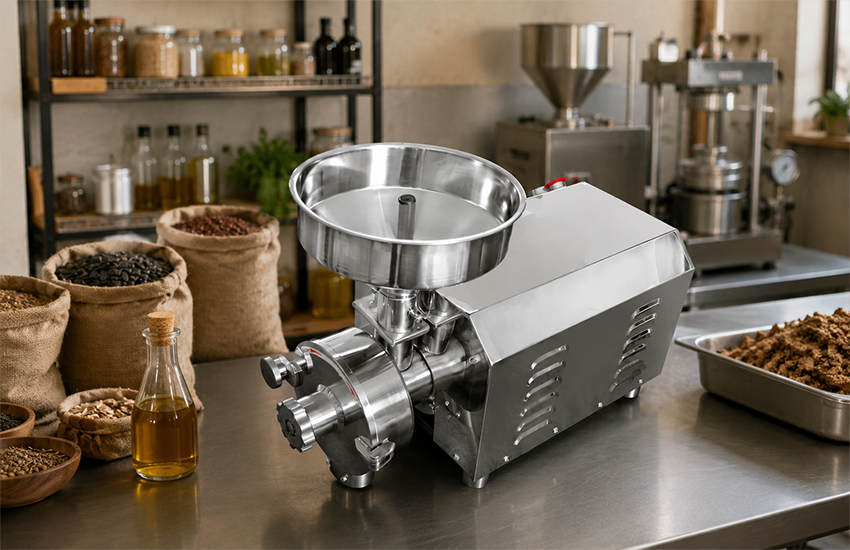
A multifunctional mill handles cereal grains, white and wild rice, coffee, soya, mung beans, corn, barley, buckwheat and oats. It will grind spices such as pepper, and freeze-dried fruit such as goji berries. And of course it will process the press cake left over from oil extraction. In practice this means one device serves several product lines at once - from flours and meals, through spices, to baking additions.
Grind adjustment - the heart of the device
The most important feature of a milling burr mill is the ability to adjust the grind smoothly. With a single knob the producer decides whether to obtain a dusty flour, a medium meal or a coarser fraction. It is this function that turns the mill from a simple machine into a precise instrument.
Both of the models described here work across a grind range of 60 to 200 microns. In practice this means a very broad spread of possibilities - from a genuinely fine grind to clearly perceptible flakes. Thanks to this, the same raw material can be deliberately shaped into different products, without needing several separate devices.
What also matters is that the adjustment is simple and quick. The producer does not lose time on complicated settings - matching the grind to the next batch is a matter of moments. In the daily work of a manufactory, where flour is milled one day and a topping the next, that convenience makes a real difference.
Cast iron grinding discs - why the material matters
At the heart of the milling mechanism in both models are cast iron grinding discs. This is a tried and trusted solution, valued wherever durability and an even grind are essential. Cast iron copes well with intensive work, resists wear and delivers a stable, repeatable result.
For a producer who mills regularly and in larger quantities, the material of the grinding elements is no minor detail. It determines whether the device will cope with daily use and whether successive batches will come out uniform. A solid mechanism also means fewer interruptions and greater confidence that the product will keep its character from one day to the next.
Each mill comes with an additional set of grinding discs. This is a practical touch - the producer has a spare on hand, allowing work to continue without a break should a replacement be needed.
More than press cake - the mill as the centre of a small manufactory
When a single device can grind grain into flour, coffee into a fresh brew, spices into an aromatic powder and cake into a topping, it stops being a single tool and becomes the centre of an entire workshop. It is precisely this versatility that makes the mill such a valuable complement to the press.
For a manufactory that wants to build a broad, coherent offer, that universality is priceless. Freshly milled coffee, your own spice blends, grain flours and cake-based products - all of it can be created in one place, on one device, under the producer's full control. In this way the mill not only closes the pressing process but also opens up entirely new directions for growth.
This versatility has one more, less obvious dimension - it lets you build a brand that is more than a supplier of a single product. A press house offering its own flour, freshly milled coffee and signature spice blends becomes, in a customer's eyes, a place with a broader character, a kind of pantry of good, locally made goods. Each of these products reinforces the same message: that behind the brand stands a particular person and a particular place, where the raw material travels its full path of transformation. One device therefore lets you not only widen your range but also deepen the identity a customer comes to trust.
Two mills, one philosophy - which to choose?
Now that we know how much depends on milling, a practical question arises: which mill to choose? The range includes two multifunctional models that share the same philosophy and the same mechanism, differing mainly in capacity and power. Choosing between them is essentially a decision about the scale at which your manufactory operates.
The 30-40 kg/h multifunctional mill - the small manufactory
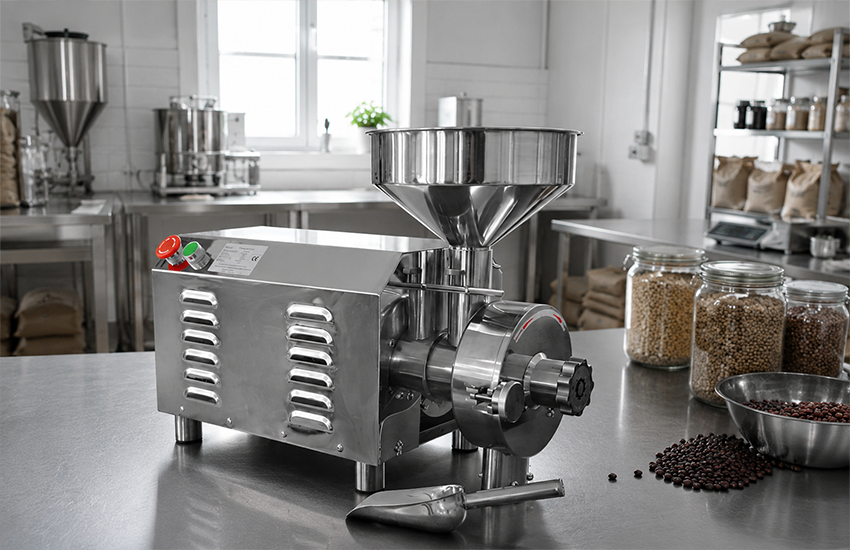
The first model is the multifunctional mill with a capacity of 30-40 kg/h. It is driven by a 2.2 kW motor, powered from a standard 230 V supply, weighs 42 kg and measures 60 x 29 x 45 cm. It works across a grind range of 60 to 200 microns, and the set includes additional grinding discs, a stainless steel scoop, a cotton bag for the milled product, a brush and cleaning brush, a stirrer, and a manual.
This is a proposition for press houses and manufactories just introducing milling into their work, or operating at an intimate scale. It will prove itself where batches are smaller and the emphasis is on variety and quality rather than continuous, large-scale production. Its compact dimensions and lower weight make it easy to find a place for, even in a small workshop.
For a producer taking their first steps in processing press cake, it is a natural choice - a device that gives full control over the grind without reaching for industrial-capacity equipment.
The 50-70 kg/h multifunctional mill - for a growing operation
The second model is the multifunctional mill with a capacity of 50-70 kg/h. It is driven by a more powerful 3.6 kW motor, also running from a 230 V supply. The device weighs 67 kg and measures 65 x 32 x 45 cm, and like the smaller model it works across a grind range of 60 to 200 microns. The set of accessories is analogous: additional grinding discs, a stainless steel scoop, a cotton bag, a brush and cleaning brush, a stirrer, and a manual.
This model was designed with producers in mind whose operation has already grown and who mill larger quantities of raw material on a regular basis. Higher capacity and a stronger drive mean the device comfortably handles more intensive work - larger batches of flour, regular milling of toppings, or steady production for a farm shop.
If milling has become an everyday part of your manufactory rather than an occasional extra, the larger model gives you comfort in use and a reserve of capacity that lets you grow your offer without worrying about throughput.
Comparison - what they share and what sets them apart
The two mills have far more in common than not. In both, the heart of the mechanism is a set of cast iron grinding discs, both offer the same grind range of 60 to 200 microns, both run from a standard 230 V supply, and both arrive with an identical set of accessories. This means that whichever you choose, you get the same working philosophy and the same possibilities when it comes to texture.
The differences come down to scale. The table below shows this most clearly:
| Parameter | Mill 30-40 kg/h | Mill 50-70 kg/h |
|---|---|---|
| Capacity | 30-40 kg/h | 50-70 kg/h |
| Motor power | 2.2 kW | 3.6 kW |
| Power supply | 230 V 50 Hz | 230 V 50 Hz |
| Grind range | 60-200 microns | 60-200 microns |
| Weight | 42 kg | 67 kg |
| Dimensions | 60 x 29 x 45 cm | 65 x 32 x 45 cm |
The conclusion is simple: if you are just starting out or working at a smaller scale, the 30-40 kg/h model gives you everything you need. If your operation is growing and you mill a lot and often, the 50-70 kg/h model provides the reserve of power and capacity you need.
From cake to a product with character - how it looks in practice
The theory sounds convincing, but the real value of milling on site only becomes clear in daily work. Imagine a typical day in a manufactory that presses its own oil and processes the cake.
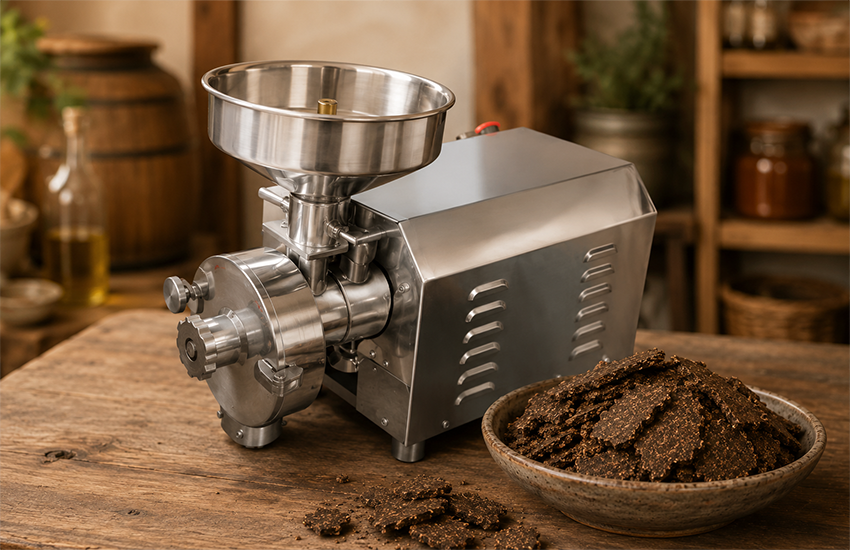
When pressing is done, fresh cake comes out of the press. Instead of going into a sack to wait, it moves straight to the mill. The producer sets the grind according to what they want to prepare that day - a fine flour for baking, a meal for porridge, or a coarser topping. Within a quarter of an hour, the raw material that moments earlier was a leftover from pressing becomes a finished product with character.
That same day, the same device can be used to grind fresh coffee for a farm café, prepare a house spice blend, or mill grain into bread flour. One day, one place, one device - and several different goods as a result, each bearing the same mark: it was made here, from start to finish. This is the daily reality of a manufactory in which the press and the mill work side by side.
It is precisely this closeness of the processes - pressing and milling in one place - that delivers an effect impossible to achieve by handing either stage to someone else.
A freshness that cannot be faked
A great deal is said about the freshness of oil today, and rightly so. But the same principle applies to flours and toppings made from cake. Freshly milled cake retains the full aroma and vividness that fade over time. Milling as you go, just before packing or use, lets you offer a product in its best possible form.
A producer who mills on site can synchronise that stage with the rhythm of their work. They do not have to prepare large stocks of milled material in advance - they mill when it is needed, so their flours and toppings reach the customer fresh. That is a promise hard to keep if milling happens elsewhere and well ahead of time.
Batch consistency - a repeatable signature
A brand is built on trust, and trust on repeatability. A customer buying your pumpkin topping for the second time expects it to be the same as before. This is where the strength of controlled milling shows itself: a grind once chosen and remembered lets you reproduce the same result batch after batch.
Thanks to precise adjustment, a producer can return to proven settings and keep the consistent character of their products. It seems a small thing, but it is from small things like this that recognisability is born. A repeatable texture becomes part of the brand's identity - a quiet signature a customer comes to associate with a specific producer.
How to weave milling into the rhythm of the press house
Owning a mill is one thing; skilfully fitting it into the daily work of the press house is another. Milling is best treated not as a separate task but as a natural extension of pressing. A few simple principles help make this stage run smoothly and yield repeatable results, while keeping the device serving you for years.
Preparing the cake before milling
The key to a good grind is properly prepared raw material. Fresh cake coming out of the press is often still warm and contains residual fat, so it pays to give it a moment to rest and let excess moisture evaporate. Dry, well-broken-up cake mills evenly and does not overburden the mechanism, and the result is cleaner and more predictable.
The condition of the cake depends on the type of seed and the press settings, which is why it is a good habit to assess the raw material before each batch. More oily cakes, such as those from flax or hemp, demand a little more attention than dry cereal cakes - they clump more easily and mill better when well dried. The more carefully prepared the raw material, the more repeatable the product at the output, and repeatability is the foundation of a recognisable brand.
Organising the work around a single device
Because the milling burr mill is a multifunctional device, in a single workshop it can serve several different raw materials - grain flours, coffee, spices and cake-based products. To keep flavours and aromas from mingling, it is worth planning the order of milling and seeing to cleaning between batches. The brush and cleaning brush included in the set make this much easier, and regular care translates into a longer life for the discs.
It also helps to establish fixed grind settings for recurring products. When you know which position of the knob corresponds to your signature topping and which to a delicate flour, every successive batch comes out the same. This kind of organisation turns one device into the heart of an orderly, predictable operation, where nothing is left to chance and every product carries the same recognisable character.
Building a brand around the producer, not just the product
The most important change taking place in the oil sector today is not about machines but about a way of thinking. Consumers less and less often buy an anonymous product off the shelf. More and more, they look for the person, the place and the story behind it. They ask who pressed this oil and who milled this flour.
In this context, milling on site becomes more than a stage of production. It becomes part of the story about the producer. A manufactory that presses and mills on site can honestly say: this was made here, by our own hands, under our control, from seed to finished product. That message reaches today's audience more powerfully than any advertising slogan.
Importantly, such a narrative does not have to be invented - it follows directly from the way the press house works. A customer who sees that the same producer is responsible for every stage trusts them more readily. They are no longer buying an anonymous powder in a package, but a product with a particular story, one that can be told in a few sentences on a label, in conversation at a market, or on social media. Milling on site gives that story real, tangible substance - freshness, character, repeatability and full control over the raw material.
"Milled here" - a new promise of quality
The words "pressed here" have long been a mark of quality and authenticity. Today their natural extension is gaining ground - "milled here". It is a simple but powerful promise: that the raw material not only comes from a particular place, but has been processed there in its entirety.
For a producer, this is a chance to build a coherent, credible narrative around their own brand. Milling on site shows that the press house commands the whole process and takes responsibility for it. It lets you speak of freshness, of character, of repeatability - and back those words with real practice. And the mill, alongside the press, becomes the tool that makes that promise possible to keep.
In this way the circle closes. The seed that went into the press gives up its oil, and then - in the form of cake - returns to the process to take on a new form under the mill. Nothing is wasted, and the producer gains full control over what they create. This is the essence of a modern, artisan press house - a place where a single seed becomes a whole story.
Frequently asked questions (FAQ)
Is the mill only suitable for milling press cake?
No - it is a multifunctional device. Besides cake and pressing residue, it handles cereal grains, rice, coffee, soya, mung beans, corn, barley, buckwheat and oats, as well as spices such as pepper and freeze-dried fruit. As a result, one device serves several product lines - from flours and meals, through freshly milled coffee, to spices and baking additions.
What grind can it achieve?
Both models described here work across a range of 60 to 200 microns, which gives a very broad spread of possibilities. With a single knob you can smoothly choose the degree of grind - from a dusty, fine flour, through a medium meal, all the way to coarser flakes and toppings. It is this adjustment that lets you create products of different uses and sensations from a single raw material.
Which mill should I choose to start with?
It all depends on the scale of production. If you are just introducing milling into your work or operating at an intimate scale, the 30-40 kg/h model is entirely sufficient. If you mill regularly and in larger quantities, the more powerful 50-70 kg/h model is the better choice, providing the reserve of capacity needed for more intensive work.
Do the cast iron grinding discs need frequent replacement?
Cast iron is a material valued for its durability and resistance to wear, so the discs are built for intensive, daily work. How often a replacement might be needed depends on the quantity and type of raw material being milled. For the producer's convenience, each mill comes with an additional set of discs, so a spare is always on hand and work can continue without interruption.
Is press cake from every oil suitable for milling?
The cakes that mill best are suitably dry and no longer contain a large amount of fat. Cake that is too moist or too oily can clump, so it is worth paying attention to its condition before milling. In practice, the cakes left after pressing many popular seeds - such as pumpkin, black seed, flax or hemp - are excellent for processing into flours, meals and toppings of varying grind.
What comes in the set with the mill?
Each mill is supplied with a set of accessories that make daily work easier. The set includes an additional set of grinding discs, a stainless steel scoop, a cotton bag for collecting the milled product, a brush and cleaning brush, a stirrer, and a manual. This kit lets you start milling straight after unpacking the device.
Can the mill handle daily work in a manufactory?
Yes - both models were designed with regular use in mind. Cast iron grinding discs and solid construction mean the devices stand up well to intensive work. The choice between them depends on scale: the 30-40 kg/h model suits smaller, intimate production, while the 50-70 kg/h model provides a reserve of capacity where milling is heavy and frequent. In both cases the producer gains a tool that lets them close the pressing process and build an offer based on freshly milled cake-based products.